
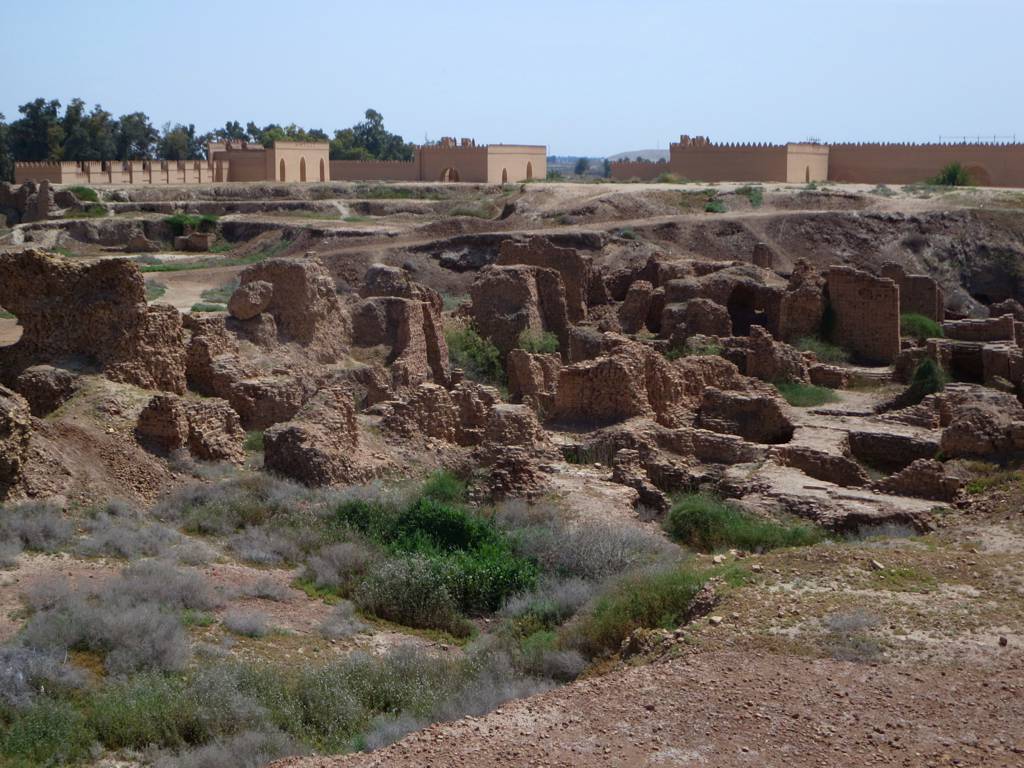
The Hanging Gardens of Babylon, one of the Seven Wonders of the Ancient World, have long captivated our collective imagination. These legendary gardens, described by ancient writers as a paradise on earth, were said to have been built in the ancient city of Babylon, near present-day Hillah, Iraq.
According to accounts, the Hanging Gardens were a marvel of engineering and horticulture. They were described as a series of tiered gardens, lush with all manner of trees, shrubs, and flowers. The gardens were said to have been irrigated by an intricate system of canals, a testament to the advanced engineering skills of the ancient Babylonians.
The Hanging Gardens were reportedly built by King Nebuchadnezzar II, who ruled Babylon in the 6th century BC. It is said that he built the gardens to please his wife, Amytis of Media, who missed the green hills and valleys of her homeland.
Despite their fame, the Hanging Gardens of Babylon are shrouded in mystery. No definitive archaeological evidence of their existence has been found, leading some to question whether they were real or simply a product of imaginative storytelling.
Whether real or mythical, the Hanging Gardens of Babylon continue to fascinate us. They are a symbol of the human desire to create beauty, to master nature, and to leave a lasting legacy.
 Ruins and Relics