
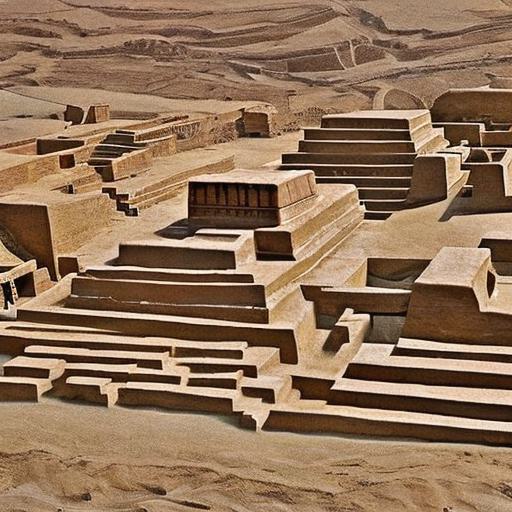
The Indus Valley Civilization, also known as the Harappan Civilization, was one of the world’s earliest urban civilizations, alongside those of Ancient Egypt and Mesopotamia. Flourishing around 2500 BC in what is now Pakistan and western India, this civilization was noted for its advanced urban planning, impressive architecture, and complex social organization.
The cities of the Indus Valley Civilization, including Harappa and Mohenjo-Daro, were marvels of urban planning. They featured grid-like street layouts, advanced drainage systems, and uniform building standards. These features suggest a highly organized central authority and a sophisticated understanding of engineering and urban planning.
The Indus Valley people were skilled artisans and traders. They crafted beautiful pottery, jewelry, and statuary, and they traded with neighboring regions, as evidenced by Indus seals and goods found in Mesopotamia.
Despite its achievements, much about the Indus Valley Civilization remains a mystery. Its script has not been deciphered, and we know little about its beliefs, political structures, and reasons for decline. The civilization was largely forgotten until the 20th century, when its ruins were discovered and excavated.
The Indus Valley Civilization is a testament to the ingenuity and resilience of our ancestors. It reminds us of the rich tapestry of human history and our shared heritage as builders, creators, and innovators.
 Ruins and Relics