
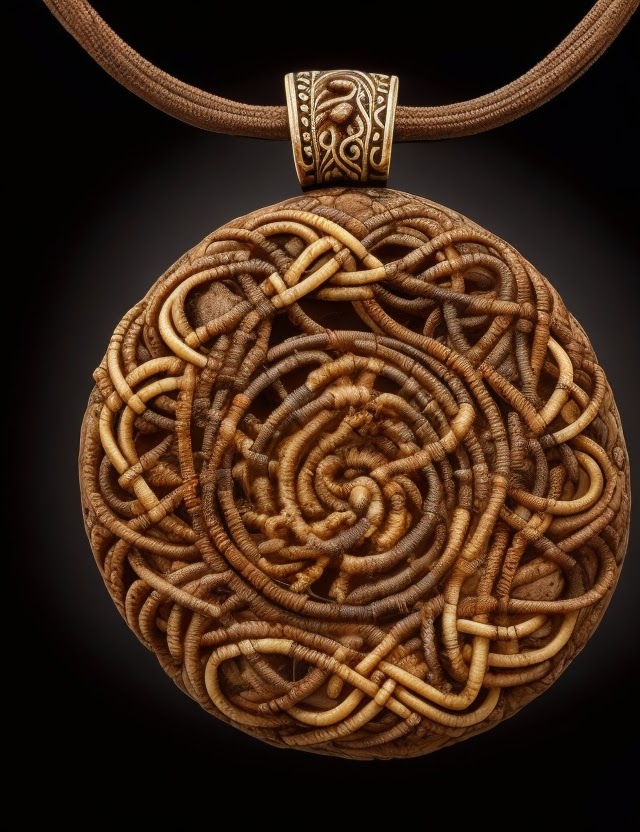
In a groundbreaking development, a team of researchers has successfully extracted ancient human DNA from a Palaeolithic pendant, a feat that opens up new avenues for understanding our ancestors and their lives. This discovery, reported in the scientific journal Nature1, is a testament to the advancements in DNA extraction techniques and their potential in archaeological studies.
The pendant, made from animal bones or teeth, was found to contain DNA that could be traced back to the humans who might have handled or worn it. This discovery is significant because it provides a direct link between ancient human populations and the artifacts they used, something that has been challenging to establish in the past.
The researchers developed a non-destructive DNA isolation method that allowed them to extract DNA from the pendant while preserving its physical integrity. This method involved a stepwise release of DNA from the bone or tooth matrix using serial incubations in sodium phosphate buffer at varying temperatures.
The DNA extraction yielded a wealth of information. The recovered DNA fragments showed elevated frequencies of cytosine-to-thymine substitutions at their ends, a characteristic consistent with the deamination of cytosine residues seen in ancient DNA. This provided further confirmation of the antiquity of the DNA.
The extracted DNA was found to be predominantly from a single ancient human individual, presumably the user or maker of the pendant. The DNA analysis also revealed the individual’s biological sex and genetic ancestry, providing a glimpse into the life of this ancient human.
This breakthrough has significant implications for archaeology. It demonstrates that artifacts made from bones or teeth are a previously untapped source of ancient human DNA. This could potentially revolutionize our understanding of ancient human societies, their cultures, and their interactions with their environment.
Moreover, the non-destructive nature of the extraction method ensures the preservation of the artifacts, allowing for further studies and examinations. This is crucial given the historical and cultural value of such artifacts.
In conclusion, this discovery underscores the potential of integrating advanced DNA extraction techniques with archaeological studies. It opens up exciting possibilities for uncovering the secrets of our past, one DNA strand at a time.
- Source – Nature.com
 Ruins and Relics