
Part 3: The Aftermath and Archaeological Evidence
Welcome to the final installment of our three-part series on the Bronze Age Collapse. We’ve explored the glory of the Bronze Age and the theories behind its collapse. Now, we’ll delve into the aftermath of this collapse and the archaeological evidence that paints a picture of this dramatic period.
The immediate aftermath of the Bronze Age Collapse was a time of significant cultural change. Many of the great cities of the age were abandoned, and in some places, writing systems were lost. This period, often referred to as a ‘dark age’, was a time of societal regression in many areas. The bustling cities and intricate trade networks of the Bronze Age gave way to smaller, isolated communities.
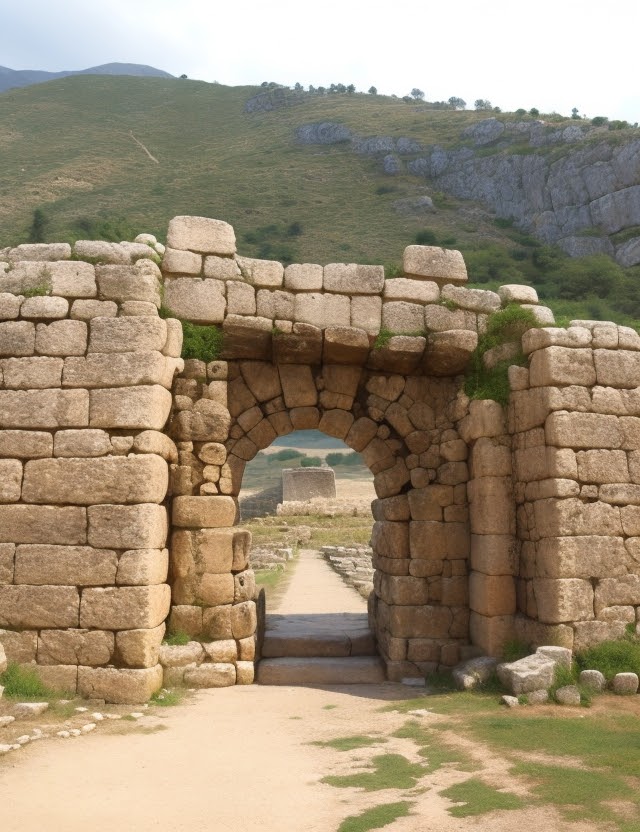
However, it’s through the archaeological evidence that we can truly understand the scale and impact of the collapse. Excavations of sites like Hattusa, the capital of the Hittite Empire, and Mycenae in Greece, reveal evidence of destruction and abandonment. Changes in pottery styles, the sudden appearance of hoards of valuables, and shifts in settlement patterns all point to a period of significant upheaval.
The long-term impact of the Bronze Age Collapse was profound. It paved the way for a shift in power dynamics and the rise of new civilizations. The use of iron began to spread, marking the beginning of a new era – the Iron Age. This transition brought about significant changes in warfare, technology, and societal structures.
As we reflect on the Bronze Age Collapse, it’s clear that this period of history holds valuable lessons for us today. From the dangers of over-reliance on a single resource to the devastating impacts of climate change, the fall of the Bronze Age civilizations offers a stark reminder of the fragility of even the most advanced societies.
Thank you for joining us on this journey through one of history’s most intriguing mysteries. We hope you’ve enjoyed this series and look forward to bringing you more insights into our past.
Citations:
- Drews, Robert. “The End of the Bronze Age: Changes in Warfare and the Catastrophe Ca. 1200 B.C.” Princeton University Press, 1993. https://press.princeton.edu/books/paperback/9780691025919/the-end-of-the-bronze-age
- Mee, Christopher. “The End of the Bronze Age in the Aegean.” In The Oxford Handbook of the Bronze Age Aegean, edited by Eric H. Cline. Oxford University Press, 2012. https://www.oxfordhandbooks.com/view/10.1093/oxfordhb/9780199873609.001.0001/oxfordhb-9780199873609-e-41
- Waldbaum, Jane C. “From Bronze to Iron: The Transition from the Bronze Age to the Iron Age in the Eastern Mediterranean.” Studies in Mediterranean Archaeology, vol. 54. Paul Åströms Förlag, 1978. https://www.amazon.com/Bronze-Iron-Transition-Mediterranean-Archaeology/dp/9185058842
 Ruins and Relics