
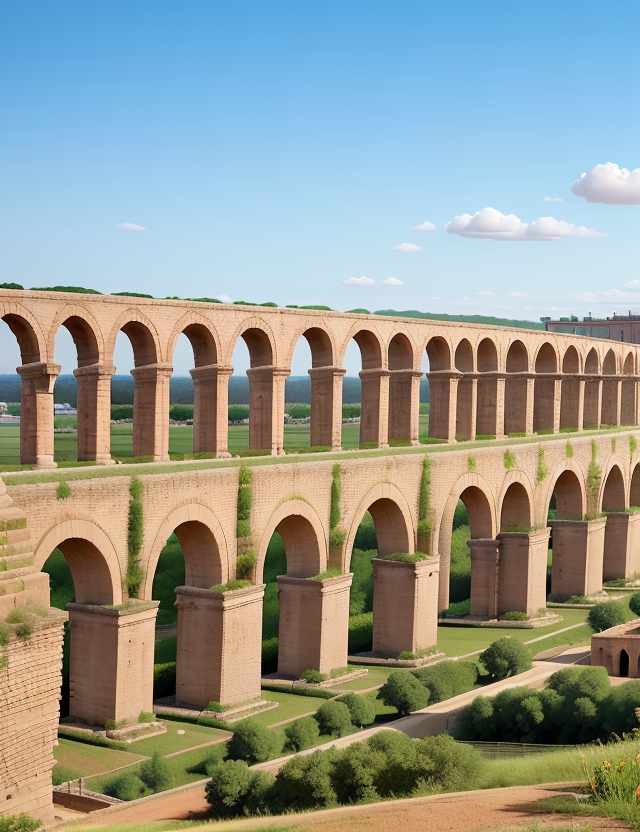
In the heart of Rome, a testament to human ingenuity and architectural prowess stands tall. The Roman aqueducts, a marvel of engineering, have withstood the test of time, narrating a tale of a civilization that thrived on innovation.
Historical Context
The story of the Roman aqueducts begins in the early days of the Roman Republic, around the 4th century BCE. Water, the lifeblood of any thriving civilization, was a precious commodity. The burgeoning city of Rome required a stable and clean water supply to sustain its growing population.
The Romans, known for their engineering acumen, embarked on a monumental task to construct a network of aqueducts that would channel water from distant springs and rivers into the city. The first of these, the Aqua Appia, was built in 312 BCE, marking the beginning of an era of architectural marvels.
Engineering Marvels
The construction of the aqueducts was a feat that required meticulous planning, understanding of hydraulic principles, and mastery over materials such as concrete and stone. The arches, elegantly spanning across valleys and hills, were more than functional; they were a statement of Roman aesthetic and technological supremacy.
The aqueducts were not merely a means to transport water; they symbolized the grandeur of an empire that stretched across continents. These masterpieces of engineering were constructed with precision, utilizing gravity to channel water from distant sources into the bustling city centers.
Impact on Urban Development
The impact of these aqueducts on urban development cannot be overstated. They facilitated the growth of public baths, fountains, and sanitation systems, contributing to the health and well-being of the populace. The legacy of Roman engineering continues to inspire modern architecture, reminding us of a time when human ambition knew no bounds.
This first part of our three-part series on the Roman aqueducts has provided an introduction to their historical context, engineering marvels, and impact on urban development. In the next part, we will delve deeper into the construction techniques, materials, and challenges faced by the engineers of ancient Rome.
 Ruins and Relics