
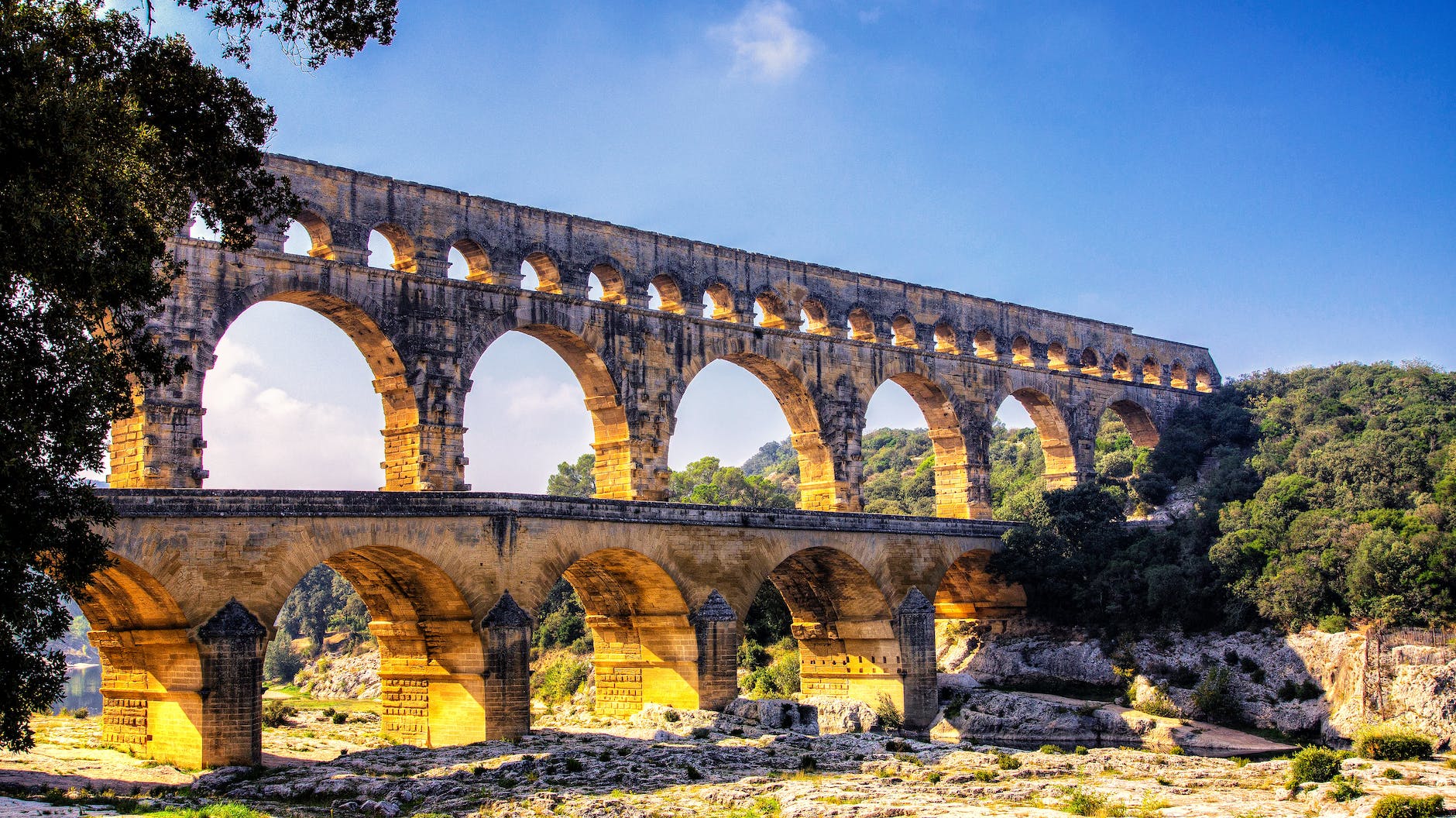
In the second part of our three-part series on the Roman aqueducts, we delve into the intricate construction techniques and challenges faced by the engineers of ancient Rome. These aqueducts were not merely functional structures; they were a testament to the Roman Empire’s technological prowess and aesthetic sensibilities.
Construction Techniques
The Roman aqueducts were constructed using a combination of materials, including concrete, brick, and stone. The engineers employed innovative techniques, such as the use of hydraulic cement, to ensure the stability and durability of the structures.
The arches, a defining feature of the aqueducts, were constructed using precisely cut stones, fitted together without mortar. This technique, known as ashlar masonry, allowed for the creation of elegant and robust arches that could span vast distances.
Challenges Faced
The construction of the aqueducts was not without challenges. The engineers had to navigate complex terrains, such as valleys and hills, and ensure that the gradient was maintained to allow gravity to channel the water. Additionally, they had to contend with seismic activity, requiring innovative solutions to ensure the stability of the structures.
The maintenance of the aqueducts was another significant challenge. Regular inspections and repairs were necessary to prevent leaks and blockages. The Romans developed specialized tools and techniques for this purpose, reflecting their commitment to maintaining these vital lifelines.
This second part of our series has explored the construction techniques and challenges faced by the engineers of ancient Rome in building the aqueducts. In the final part of this series, we will examine the legacy of the Roman aqueducts and their influence on modern engineering and architecture.
 Ruins and Relics