
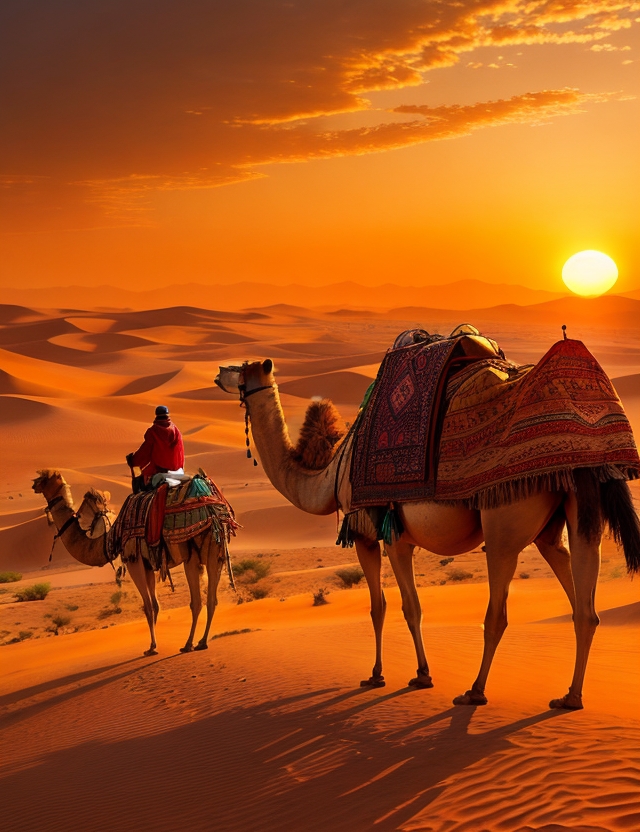
As we continue our journey along the Silk Road, we turn our attention to the unsung heroes of this ancient trade route: the camels. These resilient creatures were the lifeblood of the Silk Road, their strength and endurance enabling the flow of goods and ideas across vast and unforgiving deserts.
The Bactrian camel, with its distinctive two humps, was a common sight along the Silk Road. Adapted to the harsh climates of Central Asia, these camels were capable of carrying heavy loads over long distances, making them the ideal pack animals for the arduous journey. Their ability to withstand extreme temperatures, from the freezing cold of winter to the scorching heat of summer, was crucial to the survival of the caravans that traversed the Silk Road.
Camels were more than just beasts of burden; they were a symbol of life and prosperity. Their milk provided nourishment, their wool was used for clothing, and their dung served as fuel. In many ways, the camels were the lifeline of the Silk Road, their presence a beacon of hope amidst the vast and desolate desert.
The bond between the camel and its handler was one of mutual dependence and respect. The handlers, known as cameleers, understood the needs of their camels and cared for them with great dedication. In return, the camels carried their precious cargo across the desert, their steady pace setting the rhythm of life on the Silk Road.
As we reflect on the role of camels in the Silk Road, we are reminded of their enduring legacy. These magnificent creatures, with their strength and resilience, were instrumental in shaping the course of history. They facilitated the exchange of goods, cultures, and ideas, connecting distant lands and peoples. As we conclude our exploration of the camels of the Silk Road, we look forward to the next chapter in our series, where we will delve into the fascinating world of the Silk Road’s lost treasures.
Sources:
- “Silk Road.” Wikipedia. https://en.wikipedia.org/wiki/Silk_Road
- “Camel.” Wikipedia. https://en.wikipedia.org/wiki/Camel
 Ruins and Relics