
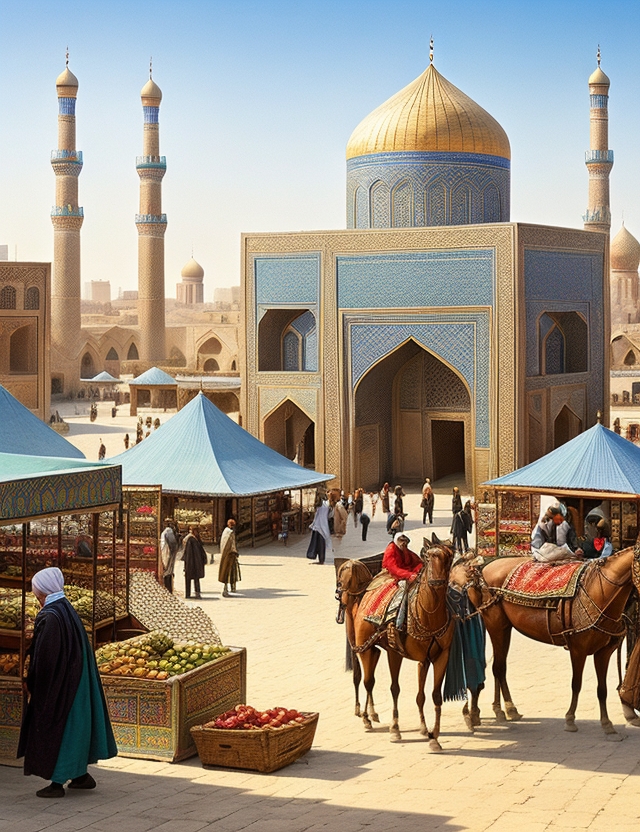
In the vast expanse of the world’s largest continent, a legendary network of trade routes once connected the East and West. This was the Silk Road, a tapestry of trails that traversed deserts, mountains, and plains, weaving together a myriad of cultures and civilizations. At the heart of this intricate network were the oasis cities, verdant havens that emerged like mirages in the desert, drawing weary travelers with their promise of rest and replenishment. One such city was Samarkand, a jewel that sparkled amidst the golden sands.
Nestled in the Zeravshan River valley, Samarkand is a city that time itself seems to have cherished. Its name resonates with tales of traders, scholars, and conquerors who were captivated by its grandeur. As an oasis city, Samarkand was a beacon of life amidst the harsh desert, its fertile lands and abundant water sources drawing weary travelers from afar. Its strategic location made it a bustling hub on the Silk Road, where merchants from distant lands exchanged not only goods but also ideas, their diverse languages filling the air in the city’s vibrant markets. Silk from China, spices from India, and precious metals from Persia were traded, infusing the city with wealth and cultural richness.
The city’s architectural splendor is a testament to its illustrious past. The Registan Square, with its majestic madrasahs adorned with intricate mosaics, stands as a symbol of the city’s intellectual and artistic prowess. The Bibi-Khanym Mosque, once one of the Islamic world’s largest and most magnificent, whispers tales of a powerful queen’s love for her emperor husband. These architectural marvels, echoing with the whispers of the past, serve as a testament to the city’s rich history and cultural heritage.
Samarkand was more than just a city; it was a melting pot of cultures. Persian, Turkic, Mongol, and Chinese influences merged, creating a unique cultural tapestry. This fusion is reflected in the city’s art, architecture, and traditions, making Samarkand a living museum of the Silk Road’s diverse heritage. As we journey through Samarkand, we are not merely exploring an ancient city. We are walking through the corridors of history, tracing the footsteps of countless individuals who, like us, were drawn to this oasis city. Samarkand, with its enduring legacy, reminds us of the Silk Road’s remarkable ability to connect people, cultures, and ideas across vast distances. As we conclude our exploration of Samarkand, we look forward to the next chapter in our Silk Road series, where we will delve into the fascinating world of the Silk Road’s most enduring travelers: the camels.
Sources:
- “Silk Road.” Wikipedia. https://en.wikipedia.org/wiki/Silk_Road
- “Samarkand.” Wikipedia. https://en.wikipedia.org/wiki/Samarkand
 Ruins and Relics