
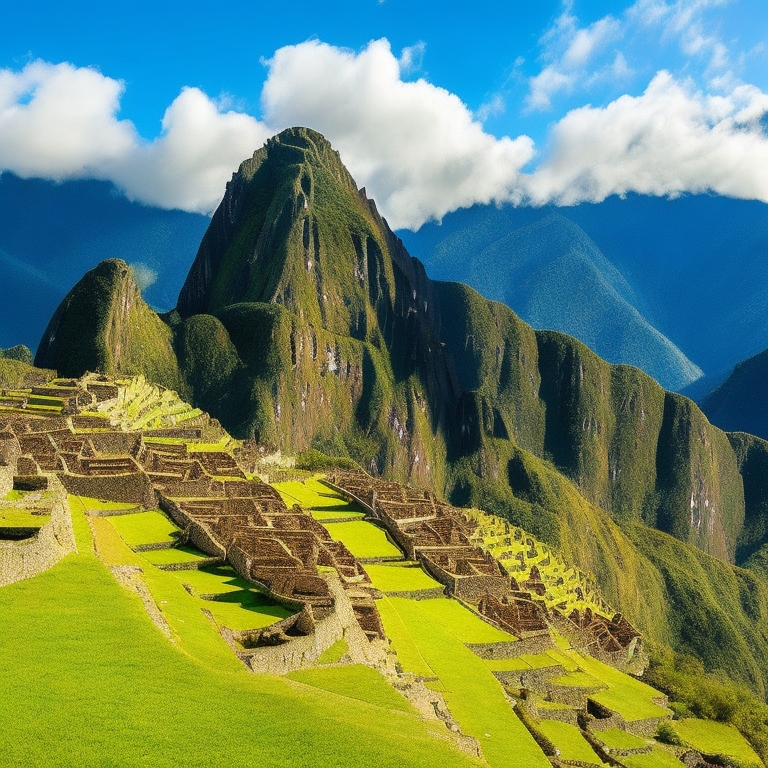
Welcome to the fourth installment of our five-part series on Archaeological Discoveries That Changed History. Today, we venture into the cloud-shrouded mountains of Peru to explore the enigmatic city of Machu Picchu, a marvel of Inca architecture and engineering.
In 1911, American historian and explorer Hiram Bingham stumbled upon the ruins of Machu Picchu, hidden high in the Andes Mountains. This breathtaking city, built in the 15th century, had lain forgotten for centuries, preserved by its remote location.
Machu Picchu is a testament to the ingenuity and vision of the Inca civilization. Built without the use of mortar, the precision-cut stones fit together so tightly that even a knife blade cannot be inserted between them. The city’s layout reflects a deep understanding of astronomy, agriculture, and urban planning.
The purpose of Machu Picchu remains a subject of scholarly debate. Some believe it was a royal estate, while others argue that it was a religious sanctuary. What is clear is that Machu Picchu stands as a symbol of the Inca’s mastery over their environment and their ability to create beauty in the most challenging of landscapes.
The discovery of Machu Picchu has captivated the world and continues to inspire awe and wonder. It has become a UNESCO World Heritage Site and a symbol of Peru’s rich cultural heritage.
As we conclude this part of our series, we reflect on the timeless allure of Machu Picchu and the lessons it offers about harmony with nature and the pursuit of excellence. Join us for the final part, where we will delve into the Antikythera Mechanism, an ancient computer that challenges our perceptions of technological progress.
Citations:
 Ruins and Relics