
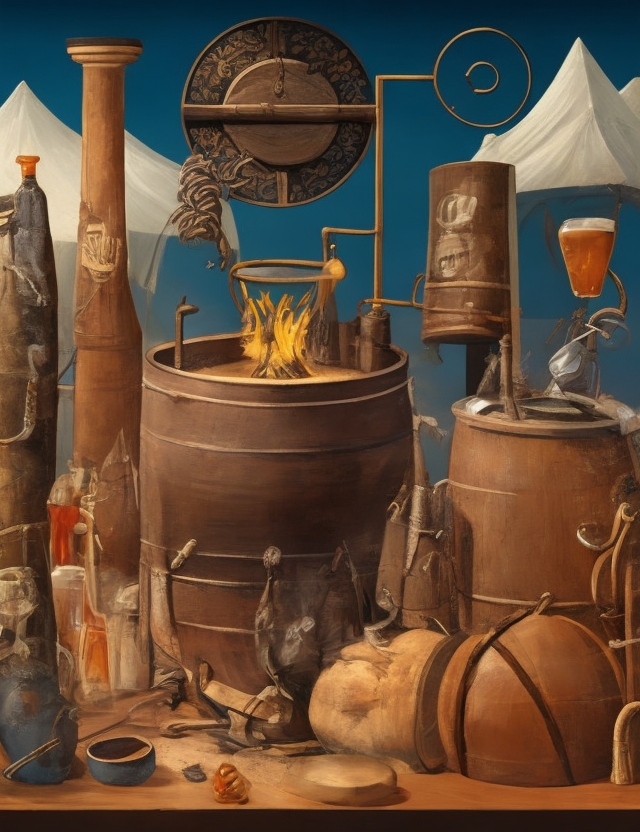
Welcome to the first installment of “Brewing Through Time: The Ancient Art and Impact of Beer.” In this six-part series, we will explore the rich history and cultural significance of beer across various ancient civilizations. We begin with a journey into the origins of beer, a beverage that has quenched thirst, fostered community, and inspired creativity for millennia.
The story of beer is as old as civilization itself. Archaeological evidence suggests that beer brewing dates back to at least 7,000 BCE in ancient Mesopotamia. The art of brewing likely emerged alongside the cultivation of cereal grains, leading to the accidental discovery of fermentation.
In ancient Sumeria, beer was considered a gift from the gods. The Sumerians even had a goddess of brewing, Ninkasi, and a hymn dedicated to her that serves as one of the oldest surviving beer recipes.
The brewing process in ancient times was a communal and often sacred activity. It involved fermenting a mixture of water, barley, and emmer wheat, creating a beverage that was nutritious and safer to drink than untreated water.
The art of brewing spread across ancient Egypt, China, Europe, and the Americas, each culture adding its unique twist and traditions to the process. Beer became a symbol of hospitality, a staple of daily life, and a central part of religious ceremonies.
The birth of beer is a testament to human ingenuity and the shared cultural heritage that transcends geographical boundaries. As we continue our series, we will delve into the specific impact of beer on different ancient civilizations, uncovering the stories and traditions that continue to influence the world of brewing today.
Citations:
- Hornsey, Ian S. “A History of Beer and Brewing.” Royal Society of Chemistry, 2003. Link
- Buhner, Stephen Harrod. “Sacred and Herbal Healing Beers: The Secrets of Ancient Fermentation.” Brewers Publications, 1998. Link
- Nelson, Max. “The Barbarian’s Beverage: A History of Beer in Ancient Europe.” Routledge, 2005. Link
 Ruins and Relics