
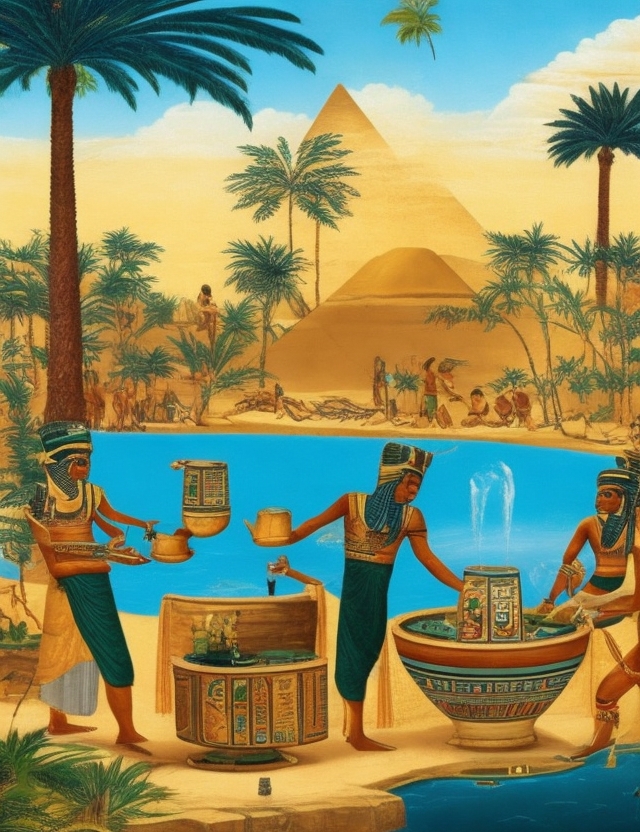
Welcome to the third installment of “Brewing Through Time: The Ancient Art and Impact of Beer.” Today, we sail along the Nile to ancient Egypt, where beer was more than a beverage; it was a symbol of sustenance, social connection, and divine blessing.
In the land of the pharaohs, beer was a daily staple, consumed by both adults and children. It was often brewed in homes, with women overseeing the process. The ingredients were simple: emmer wheat, barley, water, and wild yeast. The resulting brew was unfiltered, nutritious, and flavored with ingredients like dates and herbs.
Beer was so essential to daily life that it was used as a form of payment. Laborers who toiled on monumental projects like the Great Pyramids were often compensated with beer rations. It was a source of nourishment and refreshment in the hot Egyptian climate.
The ancient Egyptians also recognized the medicinal properties of beer. It was used as a base for various remedies and treatments, reflecting the belief in beer’s healing powers.
But beer’s significance extended beyond daily sustenance and medicine. It played a central role in religious rituals and offerings to the gods. Beer was offered to deities like Hathor, the goddess of music and dance, and Osiris, the god of the afterlife. Temples had their breweries, and beer festivals were occasions for celebration and worship.
The legacy of beer in ancient Egypt is preserved in art, literature, and archaeological finds. Scenes depicting brewing and consumption adorn tomb walls, and beer jars have been found in burial sites, accompanying the deceased into the afterlife.
The story of beer in ancient Egypt is a testament to the multifaceted role of this ancient beverage. It nourished the body, connected communities, and bridged the earthly and divine realms.
Join us for the next part of our series, where we will explore the traditions and significance of beer in ancient China.
Citations:
 Ruins and Relics