
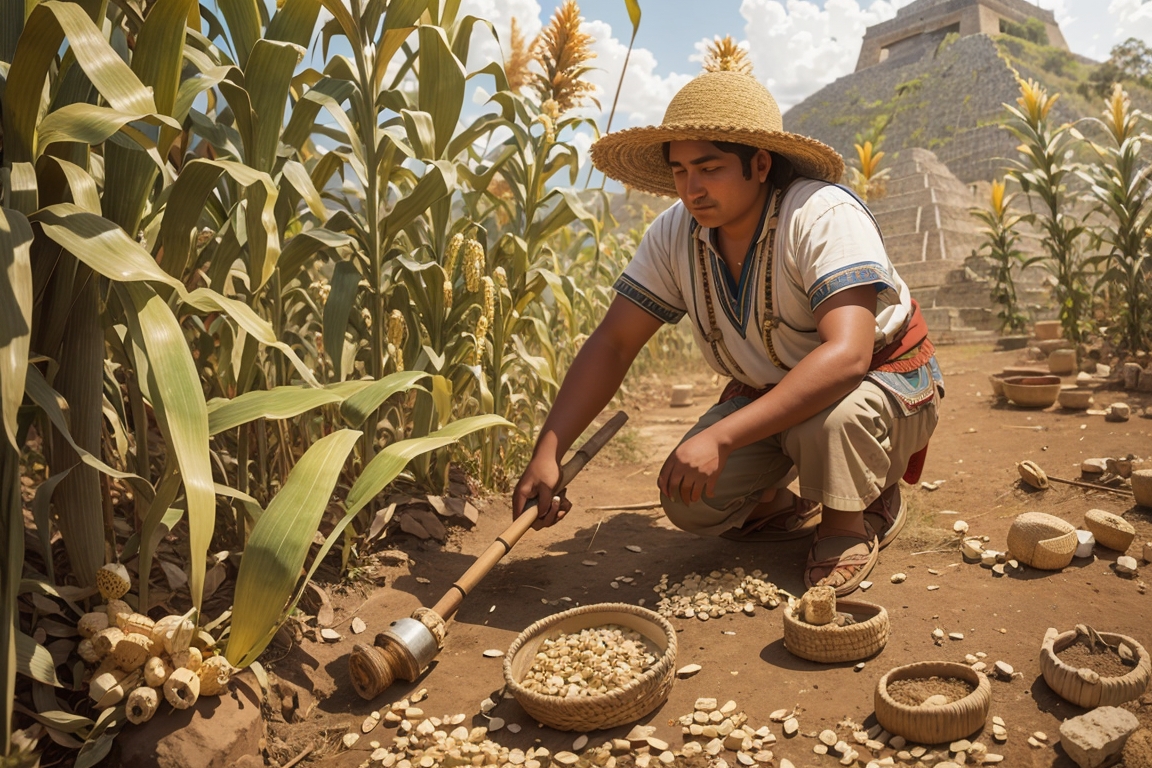
Did you know that maize, a staple in Mesoamerican diets, was so revered that it even had its own deity? This humble grain was more than just sustenance; it was the lifeblood of a civilization. Maize wasn’t merely a crop; it was the cornerstone of Mesoamerican life. Cultivated in various forms, maize provided the calories and nutrients essential for survival. But beyond its nutritional value, maize held a sacred place in the spiritual realm, symbolizing the cycle of life and death.
The cultivation of maize was an intricate process that involved careful selection and breeding. Over generations, Mesoamerican farmers developed techniques to optimize yield and nutritional content. The maize was often ground into a dough called “masa,” which served as the base for a variety of dishes. From this simple ingredient, a culinary universe emerged, ranging from tamales wrapped in corn husks to flat, round tortillas.
While maize was the star, beans and squash played crucial supporting roles. Beans replenished the soil with nitrogen, and squash leaves acted as a natural mulch. Together, these “Three Sisters” formed a symbiotic relationship that sustained both the land and its people. The concept of the Three Sisters was not just agricultural; it was deeply spiritual. Each plant had its own deity and set of rituals, and the trio was often depicted in art and mythology.
Beans were a primary source of protein and were often combined with maize to create nutritionally complete meals. Squash, on the other hand, provided essential vitamins and minerals. The seeds were a valuable source of fats and proteins. The Mesoamericans were culinary innovators. From tamales to tortillas, the food landscape was rich and diverse. These dishes were more than just meals; they were communal experiences, often tied to religious ceremonies and seasonal celebrations.
The importance of food extended into the realm of spirituality. Maize gods were prevalent in the pantheon of Mesoamerican deities, and rituals surrounding planting and harvest were deeply ingrained in the culture. These ceremonies were not mere superstitions; they were a form of ancestral wisdom, guiding communities through the agricultural calendar. The gods were appeased, and the spirits of the earth were honored, ensuring a bountiful harvest and the continued prosperity of the people.
As we explore the culinary traditions of ancient Mesoamerica, we find a tapestry woven with threads of innovation, spirituality, and community. It’s a vivid reminder that food is more than sustenance; it’s a language that speaks to our most primal instincts and loftiest aspirations. The Mesoamericans understood this profoundly. For them, every meal was a communion with the earth and the divine, a daily ritual that nourished both the body and the soul.
So, the next time you enjoy a dish made from maize, beans, or squash, take a moment to reflect on the rich cultural and spiritual tapestry that gave birth to these humble ingredients. You’ll find that you’re not just eating food; you’re partaking in a millennia-old tradition that celebrates the intricate relationship between humans and the earth.
 Ruins and Relics