
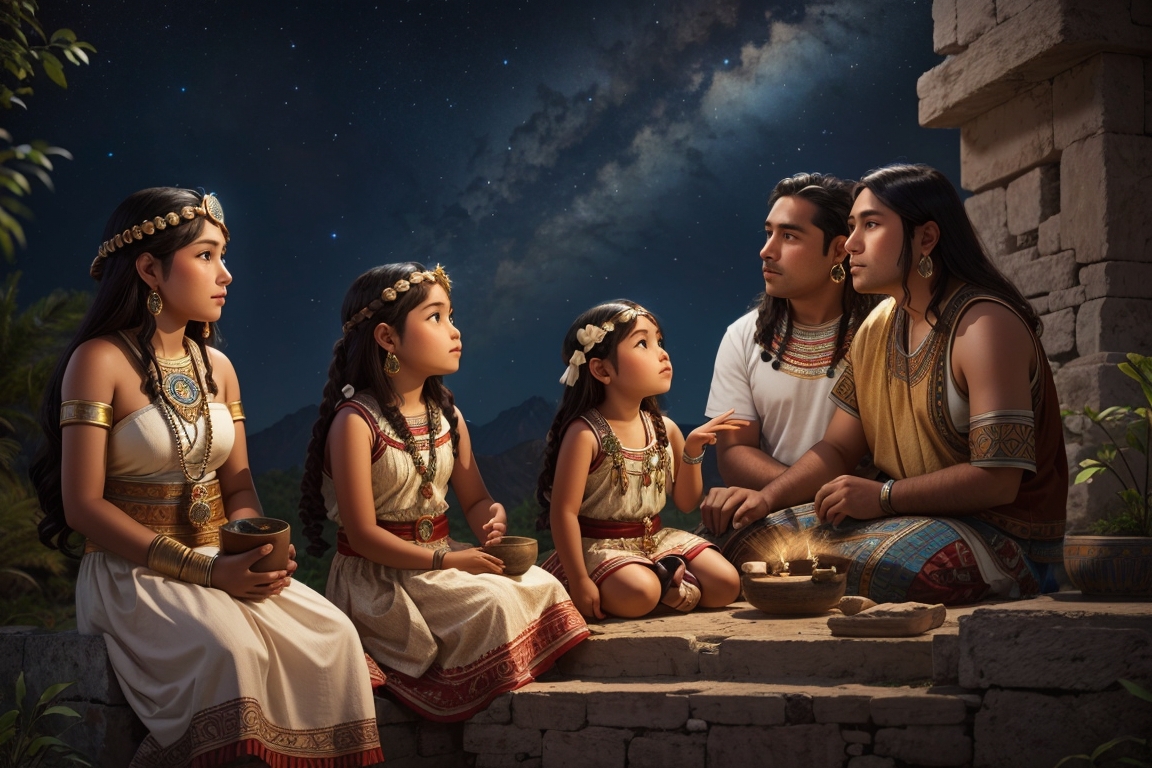
In the heart of ancient Mesoamerica, the sky was more than a tapestry of twinkling stars and celestial bodies. It was a grand stage where the gods enacted dramas that shaped the world below. The Mesoamericans were keen astronomers, meticulously tracking the movements of the sun, moon, and planets. These celestial observations were not mere scientific endeavors; they were deeply intertwined with the spiritual beliefs and daily practices of these ancient civilizations.
The Mesoamerican calendar was a complex system that combined a 260-day ritual calendar with a 365-day solar calendar. This dual calendar system was used to schedule religious ceremonies, agricultural activities, and other societal events. Each day had its own name and symbol, often associated with a specific deity or natural element. The days were grouped into periods of 13 or 20, each with its own set of rituals and celebrations.
The importance of celestial events was evident in the architecture and urban planning of Mesoamerican cities. Temples and pyramids were often aligned with the rising or setting sun during equinoxes and solstices. Plazas and ball courts served as astronomical observatories, their orientations carefully chosen to mirror celestial alignments. These architectural marvels were not just feats of engineering; they were sacred spaces where the divine and earthly realms converged.
One of the most significant celestial events was the zenithal sun, when the sun was directly overhead. This event, which occurred annually, was associated with the maize god and the agricultural cycle. Rituals were performed to ensure a bountiful harvest, and it was considered an auspicious time for important activities like warfare and marriage. The zenithal sun was not just an astronomical phenomenon; it was a divine signal, a cosmic nod from the gods granting favor to the endeavors of mortals.
The pantheon of Mesoamerican gods was vast and varied, each deity governing a specific aspect of life or nature. There were gods of rain, fertility, death, and war, among others. Rituals and ceremonies were performed to honor these gods, often involving offerings of food, incense, and sometimes human sacrifices. These rituals were not mere acts of devotion; they were contracts, a give-and-take relationship where humans offered gifts in exchange for divine favors.
As we delve deeper into the spiritual landscape of ancient Mesoamerica, we find a world where every action had a cosmic significance. The cycles of the moon dictated the timing of agricultural activities, the rising of Venus marked the onset of the rainy season, and solar eclipses were considered ominous signs that foretold upheaval and change. The Mesoamericans lived in a world imbued with spiritual meaning, where the boundaries between the earthly and divine were fluid and permeable.
In conclusion, the spiritual fabric of Mesoamerican society was intricately woven with threads of celestial wisdom and divine intervention. It was a world where the gods walked among men, their whims and desires shaping the course of human history. And as we look up at the night sky, we are reminded that we, too, are part of this grand cosmic drama, mere players on a stage set by the gods.
 Ruins and Relics