
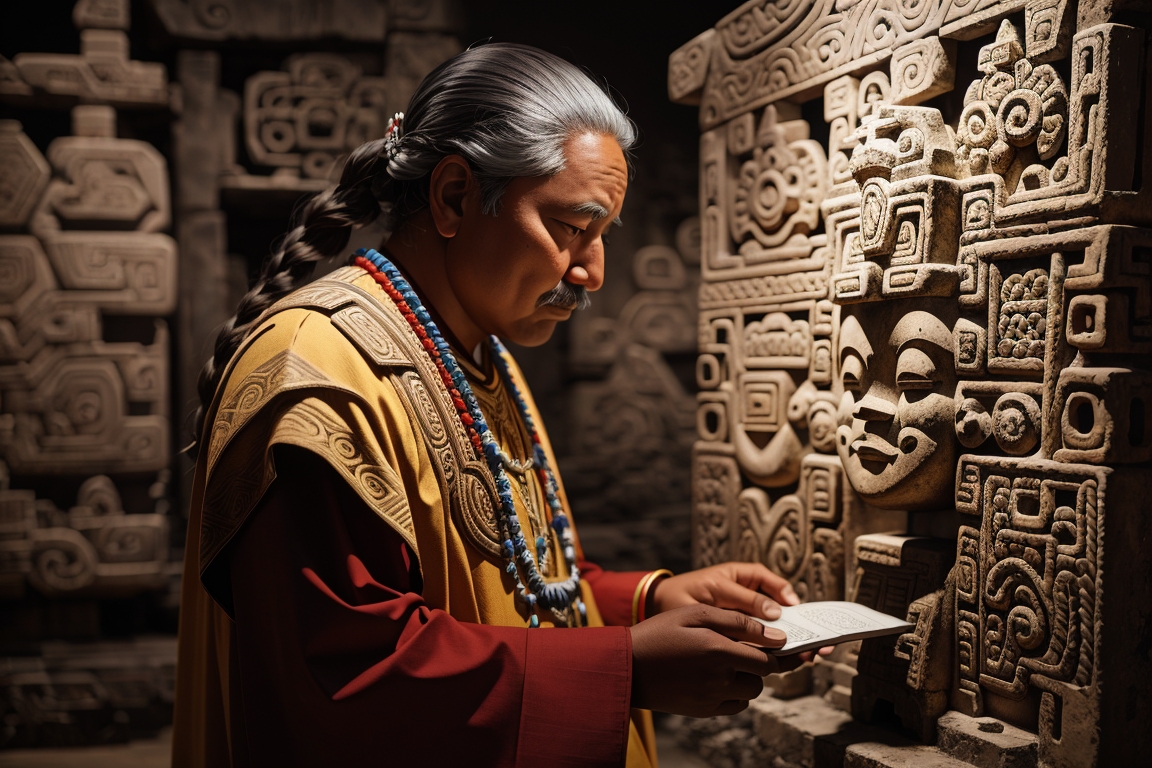
In the bustling centers of ancient Mesoamerican cities, scribes were often seen hunched over their work, carefully etching symbols onto stone or painting intricate glyphs onto parchment. These were not mere doodles; they were the keys to a complex system of writing that preserved the wisdom, history, and spiritual beliefs of an entire civilization.
The Maya, in particular, were renowned for their sophisticated writing system. Comprising over 800 distinct glyphs, the Maya script was a combination of logograms and syllabic symbols. Each glyph had a specific meaning, and when arranged in sequences, they formed complex sentences and narratives. The Maya script was primarily used for religious texts, historical records, and astronomical calculations. It was a tool for the elite, a secret code that separated the educated from the uneducated.
The Aztecs, on the other hand, employed a simpler but equally effective system of pictograms. While not as nuanced as the Maya script, Aztec pictograms were highly functional. They were used for a variety of purposes, from tax records to religious manuscripts. The pictograms were often accompanied by numerical symbols, allowing for a rudimentary form of accounting and data storage.
The role of the scribe was highly esteemed in Mesoamerican society. These individuals were not just writers; they were scholars, priests, and advisors. They were the keepers of knowledge, the architects of memory. Scribes underwent rigorous training, often starting as apprentices and gradually working their way up the ranks. Mastery of the script was not just a technical skill; it was a spiritual discipline, requiring years of study and meditation.
The codices produced by these scribes were invaluable repositories of wisdom. Crafted from bark paper or animal hides, these books were often folded like an accordion, allowing for easy storage and transportation. The codices were adorned with elaborate illustrations and embellishments, making each book a work of art. Unfortunately, many of these precious manuscripts were destroyed during the Spanish conquest, leaving us with only a fraction of the original corpus.
As we delve into the world of Mesoamerican writing, we are reminded of the power of the written word. It is a tool for preservation, a bridge between the past and the present. The glyphs and pictograms etched by ancient scribes are not just historical artifacts; they are echoes of a civilization that sought to immortalize its wisdom, to inscribe its essence into the fabric of time.
In reflection, the tradition of written wisdom in Mesoamerica serves as a poignant reminder of the enduring quest for knowledge and understanding. It is a testament to the ingenuity and resilience of a people who, despite the ravages of time and conquest, left behind a legacy that continues to inspire and enlighten us.
 Ruins and Relics