
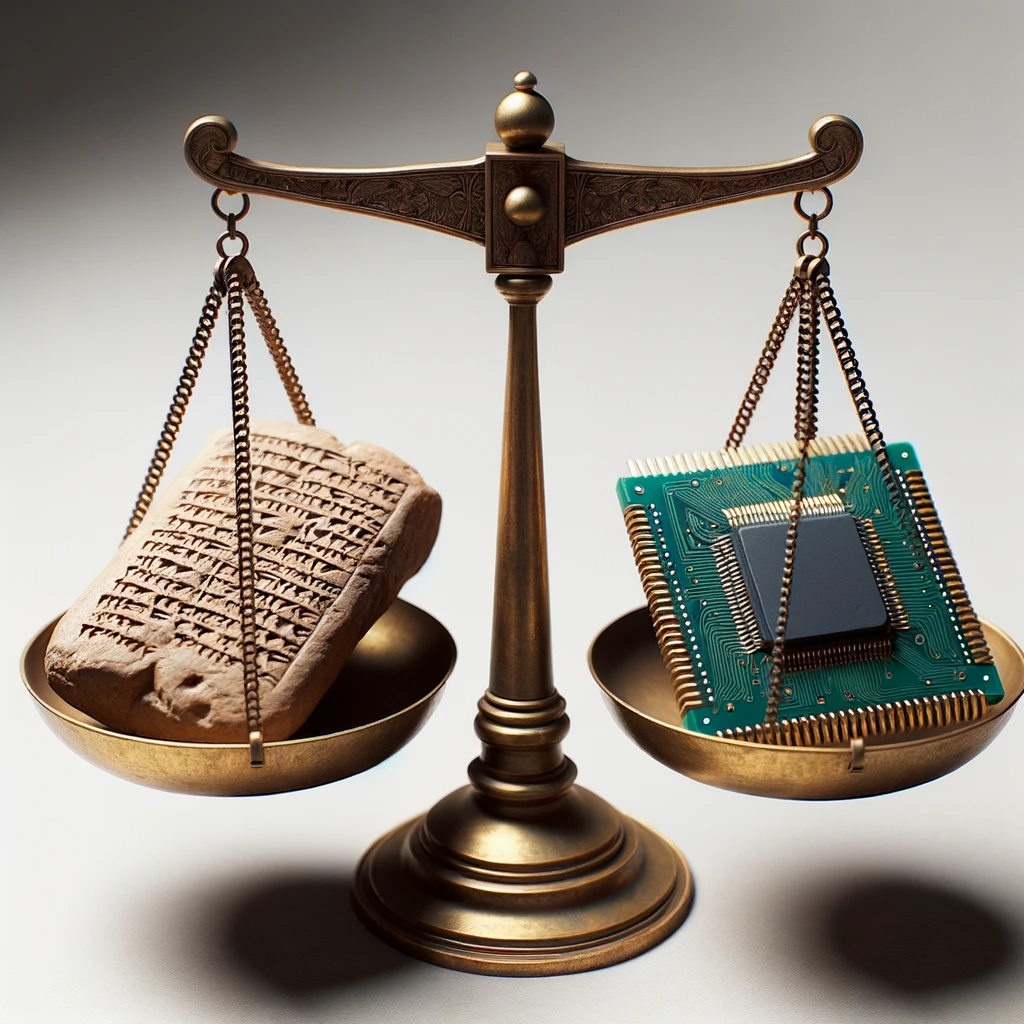
While AI can analyze an ancient script in record time, it also raises ethical questions. For instance, who owns the intellectual property of a deciphered ancient text? As we’ve seen, AI holds immense potential for advancing our understanding of ancient civilizations. However, this technological marvel is not without its ethical dilemmas. Questions of data privacy, intellectual property, and even cultural appropriation are now at the forefront of this academic discipline.
Moreover, as AI continues to evolve, what role will human experts play in the field of archaeology? While some fear that machines might replace human expertise, others argue that AI will serve as a complementary tool, enhancing rather than replacing human skills.
The debate is far from settled. Ethical considerations are complex and multi-faceted, often requiring input from experts in law, ethics, and cultural studies. For example, when AI deciphers an ancient script, who owns that knowledge? Is it the country of origin, the researchers, or the global community? These questions have no easy answers but are crucial for the responsible use of AI in archaeology.
Another concern is the potential for AI to be misused. Imagine a scenario where AI algorithms decipher a text that contains sensitive or dangerous information. Who decides what to do with that knowledge? The potential for misuse is a real concern and one that the academic community is actively addressing.
As we venture further into this digital age, the symbiosis between AI and archaeology will undoubtedly continue to evolve. Stay tuned for upcoming articles where we explore case studies and real-world applications of AI in the field of ancient studies.
 Ruins and Relics