
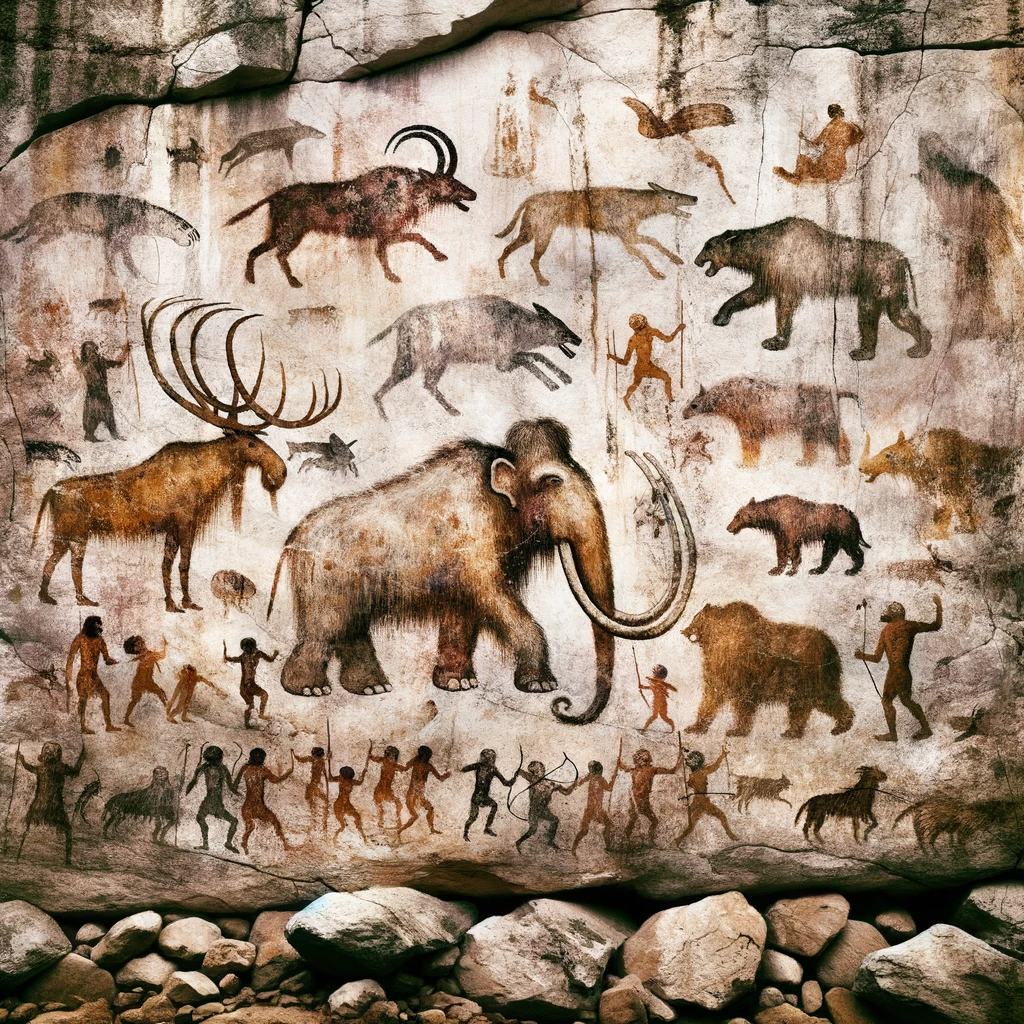
The first evidence of a pet-human relationship dates back to a 12,000-year-old grave in Israel, where a human and a dog were buried together. This ancient burial site sets the stage for a journey through time, exploring the profound and enduring bond between humans and their pets.
From the dawn of civilization, animals have played a pivotal role in human life. They’ve been hunters, protectors, and companions, shaping the course of our history in ways both subtle and profound. This series aims to delve into the fascinating relationship between humans and pets, focusing on prehistoric times, ancient civilizations, and the medieval era.
In the prehistoric age, the domestication of animals marked a significant milestone in human evolution. The first animals to be domesticated were likely wolves, ancestors of today’s dogs. Early humans and wolves entered into a mutually beneficial relationship: humans provided food scraps, while wolves offered protection and helped in hunting. Over generations, this relationship evolved, leading to the domestication of wolves and the birth of the first pets.
But dogs weren’t the only animals to share a home with prehistoric humans. Evidence suggests that cats, birds, and even some rodents were part of early human households. These animals served various roles, from pest control to companionship, and were integral to the survival and well-being of early human communities.
Fast-forward to ancient civilizations, where pets took on symbolic and even sacred roles. In ancient Egypt, cats were revered and protected by law. Killing a cat, even accidentally, was punishable by death. Cats were believed to have protective qualities and were often depicted in art and sculpture. Similarly, in Mesopotamia, birds of prey like falcons were highly valued for their hunting abilities and were often associated with royalty.
The role of pets continued to evolve during the medieval era. In Europe, hunting dogs and falcons were not just pets but status symbols. The type of animal one owned was often indicative of their social standing. For example, greyhounds were associated with nobility, while commoners were more likely to own terriers. Falcons were used in the sport of falconry, a popular pastime among the medieval elite. These animals were trained to hunt and were highly prized for their skills.
While pets have played various roles throughout history, their core function as companions has remained constant. The emotional bond between humans and pets is timeless, transcending cultures and eras. This series will delve deeper into each period, exploring the intricacies of this fascinating relationship.
As we move beyond the medieval era into more recent times, the role of pets has continued to evolve. Today, pets are part of the family, often pampered and indulged in ways that would be unimaginable to people of earlier eras. Advances in veterinary care, pet nutrition, and animal behavior science have elevated the status of pets in our lives. And as we look to the future, emerging technologies like AI and robotics hold the potential to redefine the human-pet relationship in exciting new ways.
 Ruins and Relics