
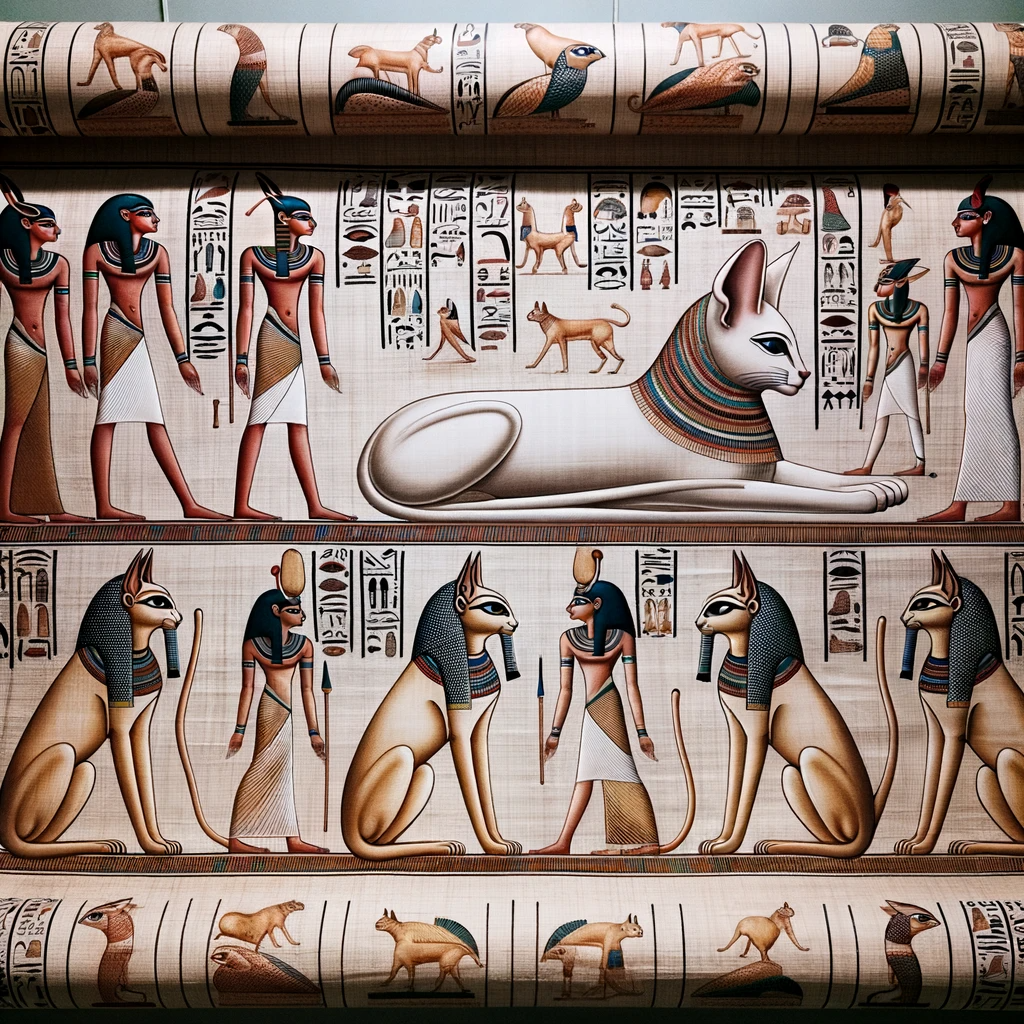
The dawn of civilization brought with it a new chapter in the human-pet relationship. As societies grew more complex, so did the roles that pets played in them. In ancient Egypt, for example, cats were not just household companions; they were sacred animals associated with the goddess Bastet. Cats were so highly valued that they were often mummified and buried with their owners. Killing a cat, even accidentally, was a grave offense punishable by death.
But Egypt was not the only ancient civilization where pets held a special place. In Mesopotamia, birds of prey like falcons and eagles were highly prized for their hunting abilities. These birds were often associated with royalty and were considered symbols of power and prestige. Falconry, the art of hunting with birds of prey, became a popular pastime among the Mesopotamian elite, a tradition that would later spread to other parts of the world, including medieval Europe.
In ancient Greece, dogs were highly valued for their hunting and herding abilities. Various breeds were developed for specific tasks, from hunting hares to guarding livestock. The Greeks even had a god, Artemis, who was often depicted with a hunting dog, highlighting the importance of dogs in Greek society. Cats, too, were common in Greek households, primarily for their ability to control pests.
The Romans inherited many of the Greeks’ views on pets and added a few of their own. Dogs were commonly used in hunting and as guards, but they were also cherished as companions. Roman literature and art often feature dogs, indicating their importance in Roman life. Cats were less common but were still valued for their ability to control pests.
As we’ve seen, pets in ancient civilizations were not just companions; they were symbols of cultural values and social status. They were often associated with gods and goddesses, reflecting their sacred status. Pets were also practical assets, helping with hunting, herding, and pest control. Their roles were diverse, reflecting the complexity of the societies in which they lived.
The significance of pets extended beyond the household. In some cultures, pets were involved in religious rituals and ceremonies. In ancient Egypt, for example, cats were sometimes offered to the goddess Bastet as a form of tribute. Similarly, in Mesopotamia, birds of prey were often involved in religious ceremonies, reflecting their sacred status.
As societies grew more complex, the legal status of pets also evolved. In ancient Rome, for example, pets were considered property, and laws were enacted to protect them. The Twelve Tables, an ancient Roman legal code, included provisions for the protection of livestock and pets, reflecting their economic and emotional value.
The role of pets in ancient civilizations was a complex interplay of practicality, symbolism, and emotion. They were cherished companions, valuable assets, and sacred beings, reflecting the multifaceted nature of human-animal relationships. As we’ll explore in the next part of this series, the medieval era brought new dimensions to this relationship, from the role of pets in religious rituals to their status as symbols of social standing.
 Ruins and Relics