
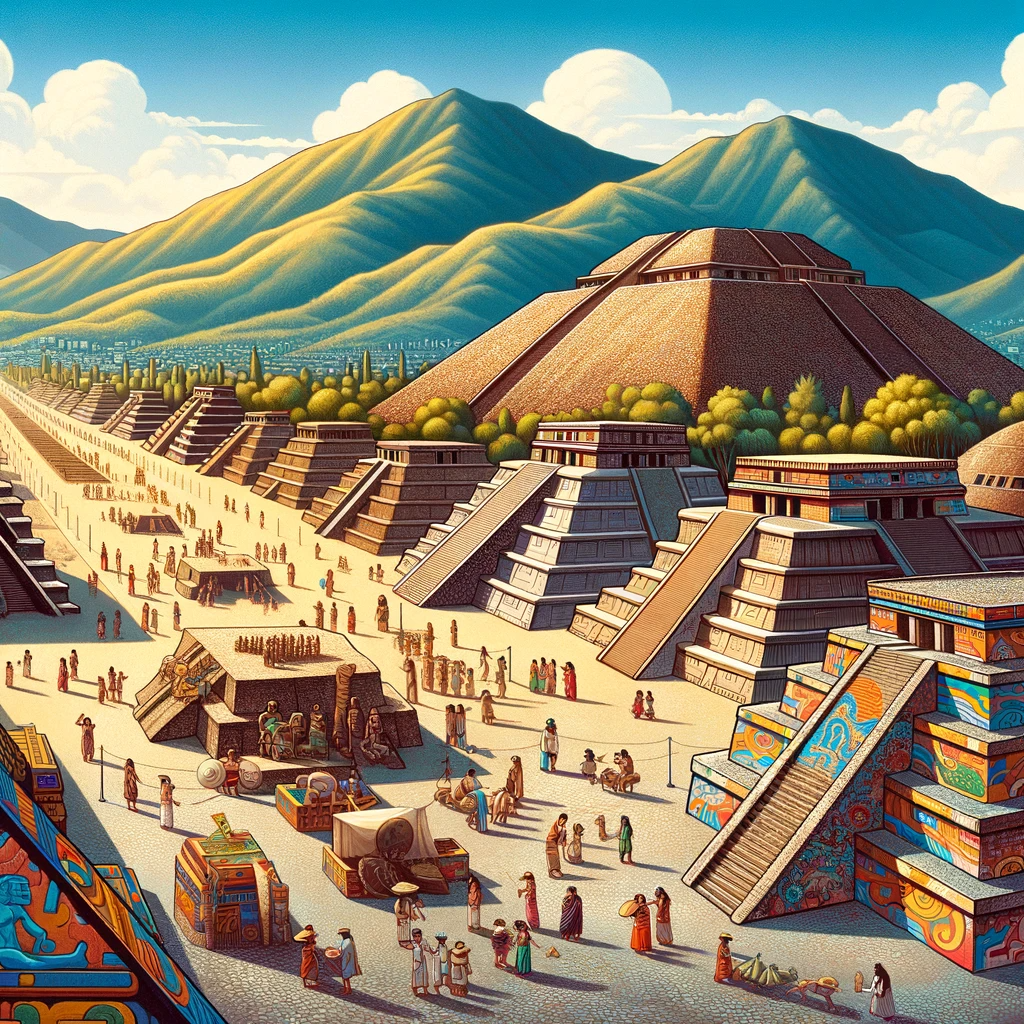
Teotihuacan, an ancient Mesoamerican city located in the Basin of Mexico, is renowned for its massive pyramids and intricate murals. Established around 400 BCE, it became one of the largest urban centers in the ancient world, reaching its peak in the first half of the 1st millennium CE. Teotihuacan’s influence extended throughout Mesoamerica, evident in the widespread adoption of its architectural styles and iconography. The city’s decline began around the 6th century CE, leaving behind numerous mysteries regarding its societal structure and sudden fall.
Key Ancient Landmarks
Teotihuacan is home to some of the most iconic ancient landmarks. The Pyramid of the Sun, one of the largest structures in Mesoamerica, offers insights into Teotihuacan’s architectural prowess. Nearby, the Pyramid of the Moon complements its grandeur, framing the ceremonial Avenue of the Dead. These structures are surrounded by smaller platforms and ancient residential compounds, like the Palace of Quetzalpapalotl, noted for its ornate carvings and murals. These landmarks not only display the city’s architectural achievements but also its religious and cultural significance.
Cultural Insights
The culture of Teotihuacan was complex and multifaceted. Its art, primarily in the form of murals, depicted various aspects of life, mythology, and religious beliefs. The murals, found in both public buildings and private apartments, illustrate a society deeply connected to its religious and mythological worldviews. The city’s layout, aligning with celestial events, and the prevalence of religious iconography in its art, suggest a society where religion played a central role. This is further evidenced by the discovery of ritual objects and remains in various temples.
Layers of History
Teotihuacan’s history is a tapestry of different periods and influences. The Tzacualli Phase (1-150 CE) marked the city’s rapid growth and construction of major pyramids. During the Miccaotli Phase (150-200 CE) and Tlamimilolpa Phase (200-350 CE), the city underwent significant urban planning and expansion. The Xolalpan Phase (350-550 CE) and Metepec Phase (550-650 CE) saw further expansion and the city’s eventual decline. Each phase contributed distinct architectural and cultural elements, creating a layered historical narrative visible in the city’s ruins.
Modern Connections
Teotihuacan’s legacy extends into modern times. It influences contemporary Mexican culture, art, and national identity. The site is a focal point for national pride and is celebrated in events and festivals. The ancient city’s urban layout and architectural principles have influenced modern urban planning in Mexico. Additionally, the iconography and mythological motifs found in Teotihuacan’s art continue to inspire contemporary artists and craftspeople, keeping the ancient city’s spirit alive in modern culture.
Teotihuacan’s enigmatic past continues to captivate and intrigue. As part of our “Travels to Antiquity” series, this exploration into the heart of an ancient civilization invites you to delve deeper into the mysteries of the past. Visit https://www.ruinsandrelics.com for more fascinating insights into ancient history and archaeology, and continue your journey through time with our “Travels to Antiquity” series at https://ruinsandrelics.com/category/travels-to-antiquity/. Join us in uncovering the layers of history and connecting with the ancient world in ways that enrich our understanding of our shared human heritage.
 Ruins and Relics