
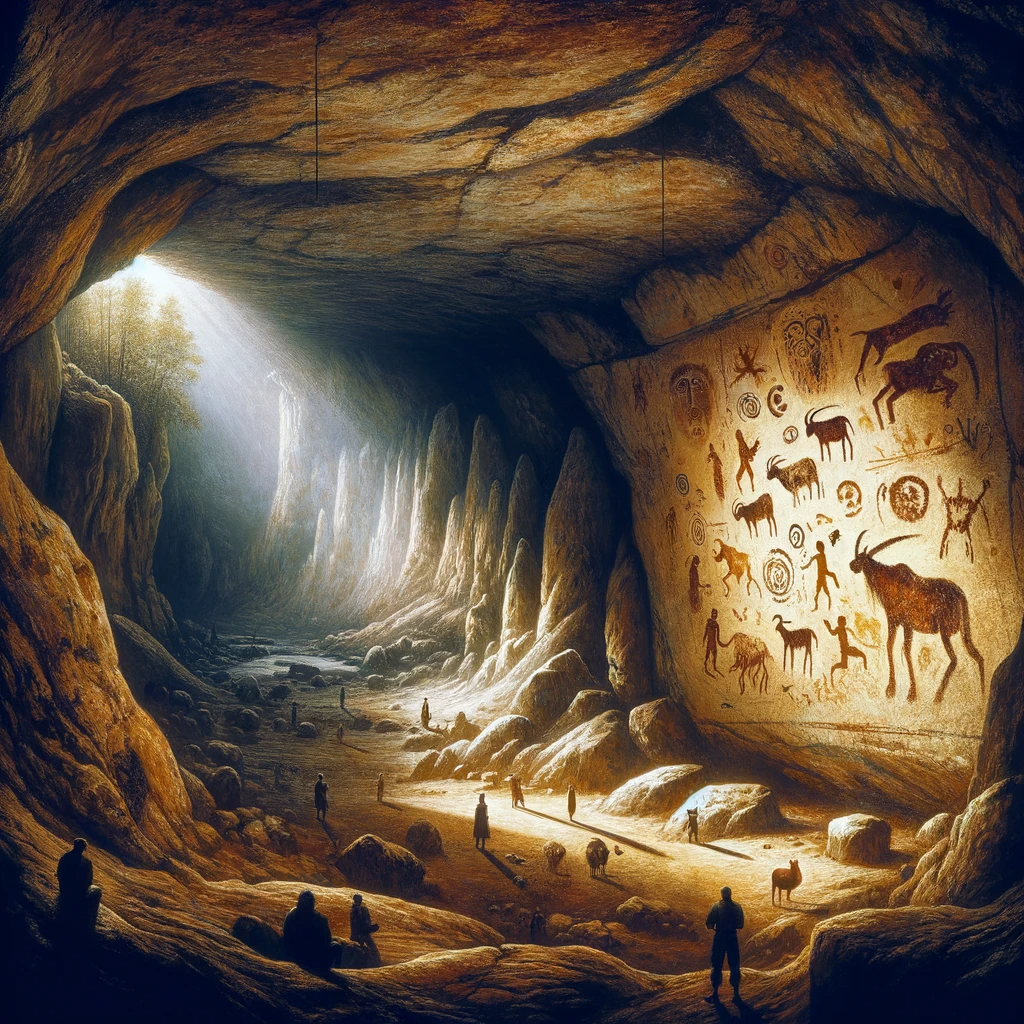
In the lush green landscape of the Dordogne region in France, hidden away from the bustling modern world, lies a portal to the past – the Lascaux Cave. Discovered in 1940, this cave houses some of the most famous and well-preserved Paleolithic cave paintings in the world, offering a glimpse into the lives and artistic expressions of our ancestors over 17,000 years ago. As we delve into the depths of Lascaux, we embark on a journey not only through space but through time, uncovering the stories and secrets that these ancient artworks hold.
Historical Snapshot
The Lascaux Cave, part of a larger network of caves in the Vézère Valley, was discovered accidentally by a group of teenagers. This prehistoric site quickly gained international fame for its exceptional quality, size, and complexity of its paintings. Radiocarbon dating indicates that most of the art was created during the Magdalenian period, around 17,000 years ago. The cave’s paintings are remarkably detailed and sophisticated, suggesting a high level of skill and creativity among the Upper Paleolithic people.
Artistic Marvels of the Cave
Lascaux is often referred to as the ‘Sistine Chapel of Prehistory’ due to its impressive array of paintings and engravings. The cave walls are adorned with over 600 paintings and 1500 engravings, depicting animals such as horses, deer, aurochs, and even felines. One of the most striking images is the ‘Great Hall of the Bulls,’ where large bulls, horses, and deer dominate the scene. These paintings are not just mere representations; they are dynamic, showing movement and expression, hinting at a deep understanding of these creatures and their environment.
Cultural Insights
The art of Lascaux reveals much about the cultural and spiritual lives of its creators. The presence of symbols and signs alongside animal depictions suggests a form of narrative or storytelling. Some theories propose that the cave served as a sacred space, where rituals or ceremonies might have taken place. The art also reflects a deep connection and reverence for nature, a hallmark of many ancient societies.
Preservation and Challenges
Since its discovery, Lascaux has faced various threats, including a fungal outbreak, prompting its closure to the public in 1963. A replica cave, Lascaux II, was opened nearby, offering visitors a chance to experience the art without endangering the original paintings. The ongoing preservation efforts at Lascaux are a testament to the importance of protecting our shared cultural heritage.
Modern Connections
Today, Lascaux continues to captivate and inspire. It reminds us of the universality of artistic expression and the interconnectedness of human history. The cave’s art has influenced modern artists and has been studied extensively by archaeologists and historians, contributing to our understanding of prehistoric life.
Lascaux Cave stands as a powerful symbol of our ancient past, a reminder of the depth and richness of human history. For more explorations into the fascinating world of ancient art and civilizations, visit our “Travels to Antiquity” series at https://ruinsandrelics.com/category/travels-to-antiquity/ and delve deeper into the intriguing world of archaeology and history at https://www.ruinsandrelics.com. Join us in a journey back in time to where art began, in the depths of the Lascaux Cave.
 Ruins and Relics