
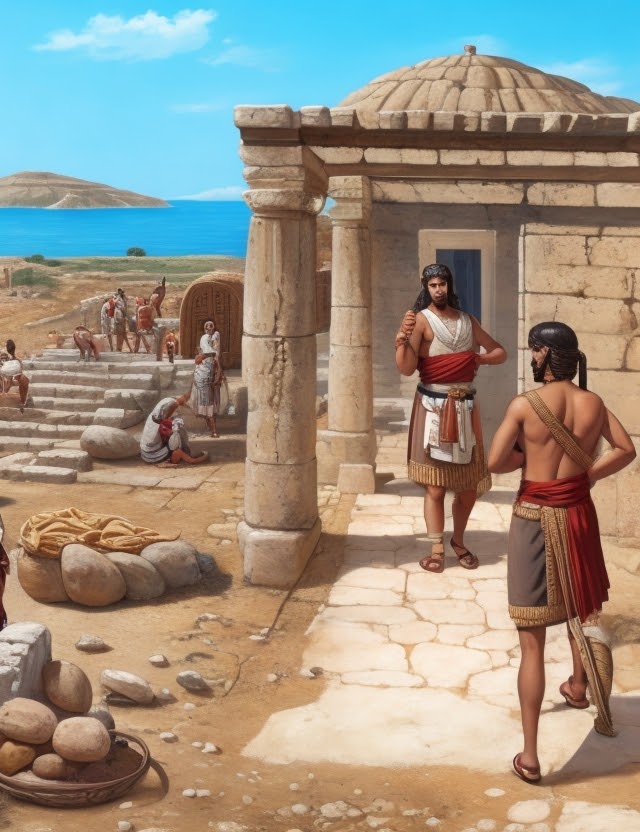
Part 1: Setting the Stage – The Bronze Age and Its Glory
Welcome to the first part of our three-part series diving into the mysteries of the Bronze Age Collapse. In this series, we’ll explore the glory of the Bronze Age, the theories behind its sudden collapse, and the archaeological evidence that gives us a glimpse into this fascinating period of human history.
The Bronze Age, a period that spanned from around 3300 to 1200 BC, was a time of great innovation and cultural exchange. Civilizations like the Egyptians, Hittites, Mycenaeans, and others thrived, creating complex societies and remarkable technological advancements. Bronze, an alloy of copper and tin, became a vital resource, used in everything from weapons to art. It was a time when human ingenuity began to shine, and the foundations of many modern societies were laid.
At the height of the Bronze Age, major cities blossomed, trade routes spanned across continents, and cultural exchanges led to shared knowledge and advancements. Cities like Mycenae in Greece, Hattusa of the Hittite Empire, and Ugarit in modern-day Syria became bustling centers of commerce and culture. The intricate trade networks established during this time allowed for the exchange of goods, ideas, and technologies, fostering a period of unprecedented growth and prosperity.
However, towards the end of this era, signs of trouble began to emerge. Economic instability, invasions, and natural disasters hinted at a looming crisis. The once-thriving cities and trade routes began to show signs of strain, and the stability of these great civilizations started to waver.
In our next post, we’ll delve deeper into this intriguing era, exploring the theories and debates surrounding the Bronze Age Collapse. What led to the sudden downfall of these advanced civilizations? Stay tuned as we unravel the mysteries of the past.
Citations:
- “Bronze Age.” Encyclopædia Britannica. https://www.britannica.com/event/Bronze-Age
 Ruins and Relics
1 Comment