
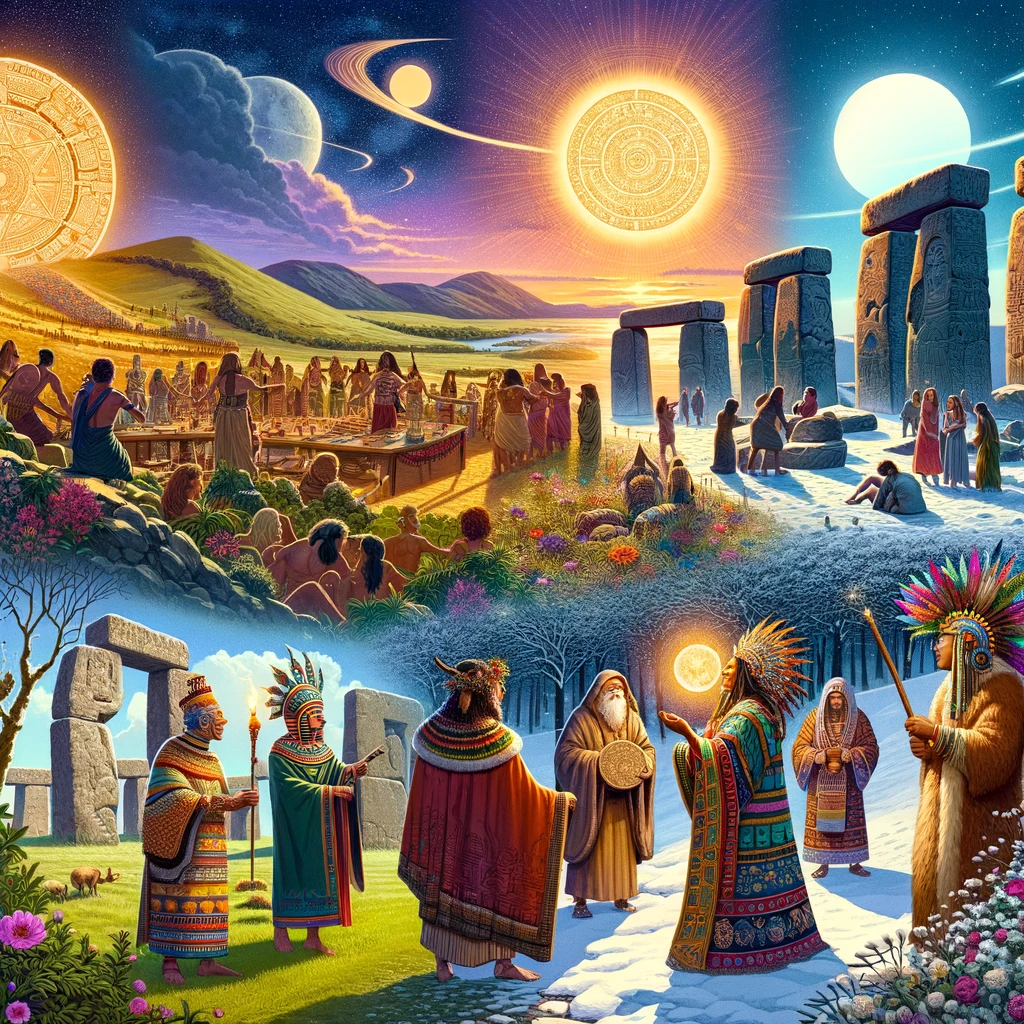
The winter solstice, a pivotal moment in the astronomical calendar, marks the shortest day of the year. This celestial event has been a cornerstone in the cultural fabric of various ancient civilizations. Each society, from the banks of the Nile to the stone circles of the British Isles, developed unique traditions and beliefs around this day, reflecting their understanding of the cosmos and their place within it.
In Ancient Egypt, the solstice was not just an astronomical event but a beacon of spiritual renewal. The alignment of the sun with the pyramids during this time was seen as a cosmic signal, heralding the rebirth of the sun god Ra. This rebirth was crucial, as it was intertwined with the life-giving floods of the Nile, which were essential for the agricultural prosperity of the region. The Egyptians celebrated with rituals and offerings, hoping to ensure the return of the sun and the continuation of their way of life.
Meanwhile, in the chilly landscapes of the British Isles, Stonehenge stood as a silent testament to the solstice. The prehistoric monument, whose exact purpose still eludes modern understanding, aligns perfectly with the solstice sunset. It is believed that the Druids, the priestly class of the Celts, gathered here for solemn ceremonies. These rituals, deeply rooted in the Druidic understanding of death and rebirth, were likely a reflection of the natural world’s cycles – a celebration of the end of the increasing darkness and the promise of a new light.
Across the ocean, in the lush jungles of Mesoamerica, the Mayan civilization observed the solstice through the lens of their advanced astronomical knowledge. For the Mayans, the solstice was a time of cosmic balance, a day when the boundary between the earthly and the celestial seemed to blur. Their observatories, architectural marvels in their own right, played a significant role in these observations. Priests and astronomers would gather to chart the stars and align their ceremonial calendar with the heavens, ensuring their society remained in harmony with the universe’s rhythm.
These diverse celebrations of the winter solstice, though separated by thousands of miles and distinct cultural practices, all share a common recognition: the power and importance of the sun. Whether it was feared, revered, or celebrated, the winter solstice was a time to acknowledge the sun’s role in the continuity of life.
As we look back at these ancient festivities, we find more than just historical curiosity. We discover a universal human experience – a collective acknowledgment of our place in the larger tapestry of the cosmos. The winter solstice, in all its varied forms, remains a timeless tradition, echoing through the ages and reminding us of our shared heritage under the sun.
 Ruins and Relics