
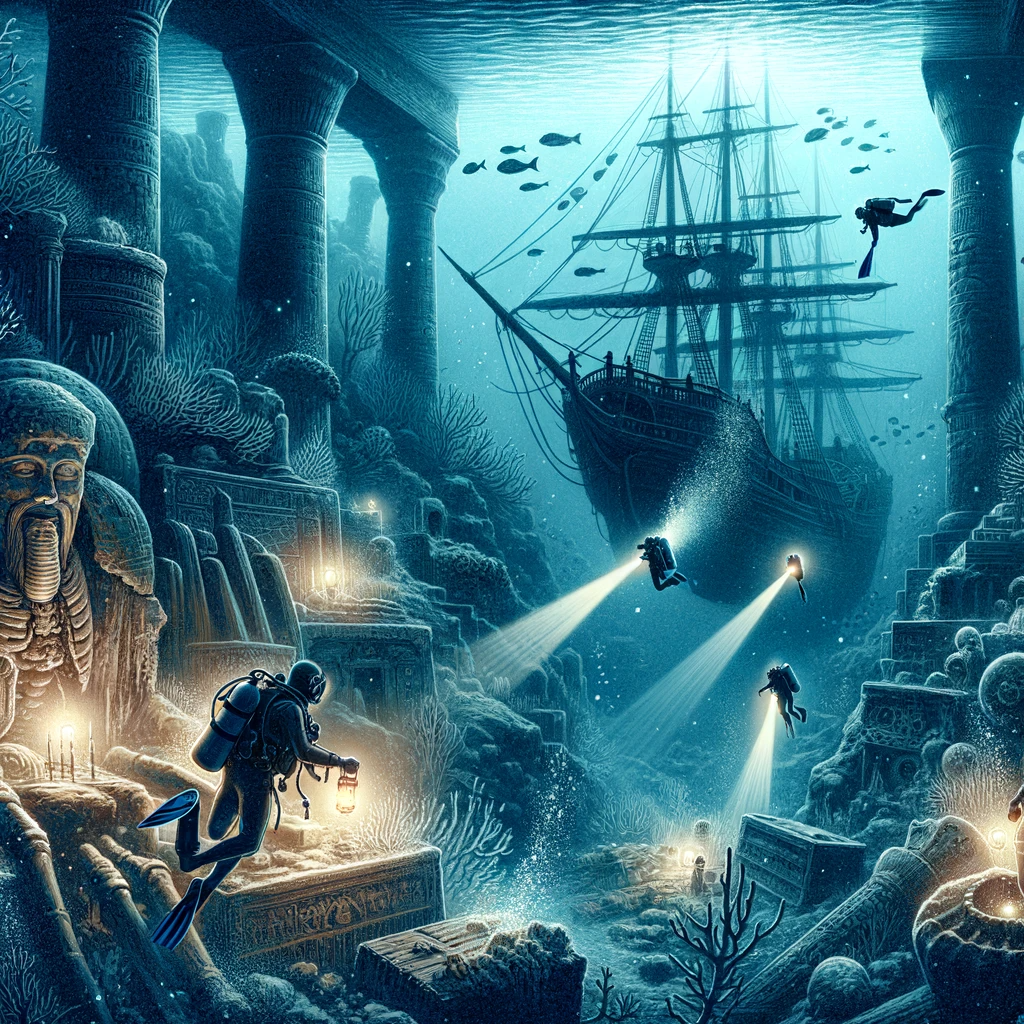
Underwater archaeology, the exploration of submerged ruins and shipwrecks, offers a unique window into past civilizations. It’s a field where archaeology, history, and marine science converge to uncover stories that have been submerged beneath the waves for centuries.
The sunken city of Thonis-Heracleion, off the coast of Egypt, is a prime example of what lies hidden beneath the sea. Once a bustling port city, it sank into the Mediterranean over a millennium ago. Its discovery revealed a wealth of artifacts, including statues, coins, and the remains of ancient ships, offering invaluable insights into the life and commerce of the classical world.
In the Caribbean, the search for sunken Spanish galleons tells a different story. These shipwrecks, laden with treasures from the New World, are time capsules from the age of exploration. They provide a glimpse into the maritime history of the 16th and 17th centuries, including the naval prowess of the Spanish Empire and the risks taken by sailors on the high seas.
The Mediterranean also holds secrets of ancient Roman life, with underwater ruins showcasing the extent of the Roman Empire’s reach. The discovery of submerged cities, villas, and harbors, complete with artifacts and sculptures, has provided a deeper understanding of Roman architecture, trade, and daily life.
Underwater archaeology is not just about discovering lost treasures; it’s a discipline that helps us understand the historical significance of these findings and their impact on our knowledge of the past. The exploration of these submerged sites continues to challenge and excite archaeologists and historians, offering a glimpse into a world that was once above water but is now part of the marine landscape.
 Ruins and Relics
For a guy like me who always dreamed about being a scuba diver, this topic is fascinating.
Amazing picture, by the way.
LikeLike
Thanks so much! Believe it or not, the image is AI Generated. We have been playing around with that and really love the visuals.
LikeLiked by 1 person